

SIMONE’S STORY
The Life I Couldn’t Yet Imagine
There is something profoundly difficult about looking back at a version of yourself whose suffering you can now recognise with a clarity you did not possess while you were living it. I think about the woman who arrived at Imani nine years ago, frightened, desperately alone, and so deeply entrenched in denial that even the suggestion that she had an eating disorder felt like an accusation she needed to defend herself against. And that was before anyone began asking about the other addictions, the behaviours she depended upon, or the history beneath them.
My family and I were not speaking when I arrived. My mom and stepfather, Ian, continued to support me financially through treatment, something I can recognise today as an expression of care even when our relationships had become painfully fractured.
I had spent much of my life learning how to survive experiences I did not have the capacity to understand, let alone process. Somewhere along the way, the ways I coped had become indistinguishable from who I believed myself to be. My eating disorder and addictions were causing enormous harm, but they were familiar. They gave me somewhere to retreat when being myself felt intolerable. Now I was being asked to relinquish those behaviours and confront an illness I wasn’t yet convinced I had.
I don’t think I understood how frightening it can be to lose something that is destroying you when it has also been one of the few things you have known how to rely upon.
There came a point when Ali told me that if something did not begin to shift, I was on the verge of losing my family again, and Imani too. The consequences of my illness were threatening the relationships and support I still had, including the very environment trying to help me recover.
I needed to hear it.
I had become accustomed to explaining my behaviour through the experiences that preceded it, and those experiences were real. They mattered. They deserved understanding and compassion. But they could not relieve me of the responsibility to examine what I was doing with the pain I carried. I needed people who could recognise my suffering without allowing it to become the only truth about me. Ali was one of those people.
Learning to Receive Love:
Some of the most significant work at Imani happened in conversations about relationships, the histories we carry into them, and the difficulty of accepting something different from what we have been taught to expect.
One of those conversations took place during a therapy session with my stepfather, Ian.My experiences with my biological father had taught me things about relationships that no child should have to learn.
Ian wanted a relationship with me. He wanted to know me, to love me, to be part of my life. And I genuinely could not comprehend what I possessed, as a person, that could make my presence in somebody else’s life desirable. I felt so undeserving that his willingness to love me seemed almost incomprehensible.During that session, I tried to explain what accepting his love felt like by describing an animal that had spent its entire life in a cage.
Imagine an animal that has never known anything beyond confinement. The cage is restrictive, perhaps even cruel, but it is familiar. The animal understands its boundaries. And then one day, somebody opens the door. Beyond it is sunlight. Space. A world that offers the possibility of something entirely different.
But how is that animal supposed to know that the sunlight is safe? How does it step towards something good when everything it has learned about the world has taught it to anticipate harm?
I was that animal.
And Ian was standing outside a cage he had not built, offering me a relationship I did not know how to receive.
It would be lovely to say that recognising this changed everything, that the insight of that session allowed me to step into the sunlight and leave the cage behind. But I could recognise the unfairness of expecting Ian to answer for the harm my father had caused, and still feel the fear those experiences had left behind.
What changed was not that I suddenly became capable of trusting him. It was that, over time, Ian continued to give me reasons to. He showed up. He remained consistent. Through ordinary moments, repeated over years, he demonstrated that his care was not a prelude to something frightening, and that his desire to have me in his life was genuine. I needed the experience of safety to become something more than an idea somebody was asking me to believe in.
Today, Ian and I have shared a weekly coffee tradition for nine years. There is something almost impossible to articulate about the significance of that ordinary ritual when I consider the woman who once sat opposite him, unable to understand why he would want a relationship with her.
My relationship with my mom carried its own history of things left unsaid. There were experiences and memories we shared, truths that existed between us but which neither of us had dared to bring into the open. We both knew. There was no absence of knowledge, only an absence of conversation.
At Imani, we began talking about those experiences openly. Those conversations did not undo our history or resolve every complexity in our relationship, but they allowed us to acknowledge truths that had previously remained unspoken.
Life Beyond Treatment
When I eventually left inpatient treatment, I moved into sober living. I still needed structure and support, and had an enormous amount to learn about living differently. Recovery was not something I had mastered within the walls of a treatment centre.
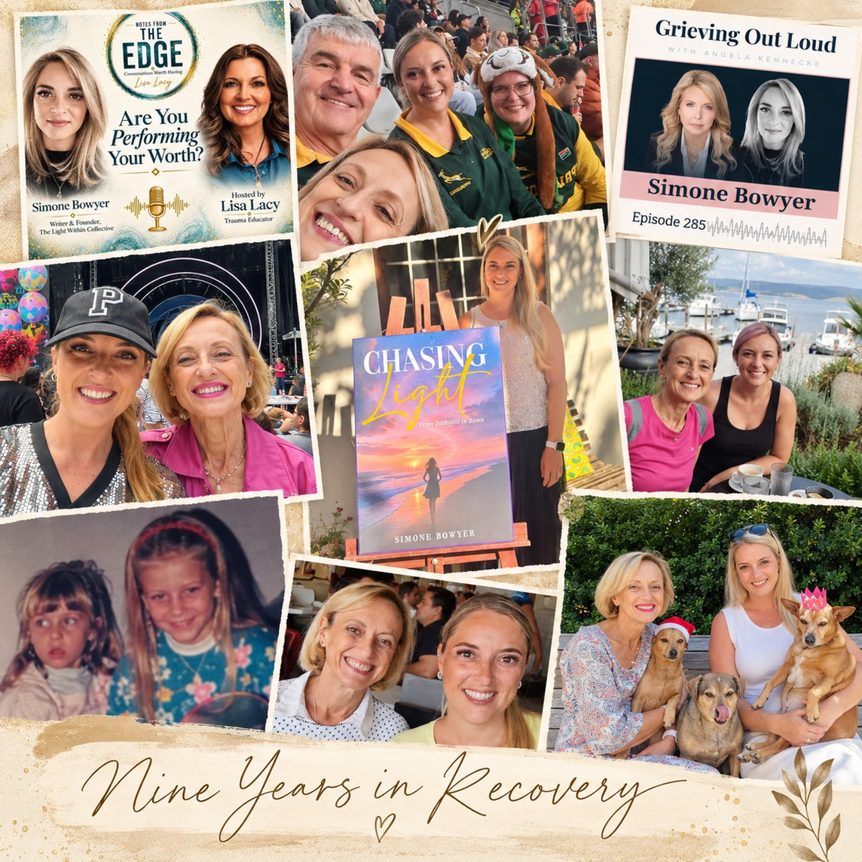
This October marked nine years of recovery from my eating disorder and addictions.
I sometimes wonder what people imagine when they hear that number. Whether they picture a gradual progression towards wellness, a life in which once insurmountable difficulties have become distant memories.
My experience has been considerably more complicated.
Recovery Is Not the End of the Struggle:
I have lived through periods of profound mental illness since Imani, including treatment-resistant depression that has required extensive intervention. There have been times when the effort involved in remaining alive has felt almost beyond what I could bear, when ordinary responsibilities became extraordinarily difficult even while parts of my life appeared functional to the people around me.
I have learned that the absence of an active eating disorder or addiction does not necessarily mean the absence of suffering. For a long time, I felt an expectation that recovery should have made me well, that having overcome one form of illness, I ought somehow to have overcome the others too.
But my nine years of recovery are not diminished by the difficulties I continue to face. They do not become less meaningful because I have needed further treatment, because I still struggle, or because there are days when I feel closer to the frightened woman who arrived at Imani than I might wish. I have come to understand that some of what we survive remains as memory, and some of it remains as us. It lives in the way we anticipate other people’s reactions, in our discomfort with being cared for, and in the beliefs we carry about what makes us worthy of love.
In April this year, I published my memoir, Chasing Light: From Darkness to Dawn. I have since founded Light Within Collective™, creating space for conversations about the ways our experiences shape us, particularly the parts of ourselves we regard as flaws without considering what they may have helped us survive. I have also developed STAY, a mental health support app grounded in the understanding that sometimes the most meaningful support is help remaining present for the moment immediately in front of us.
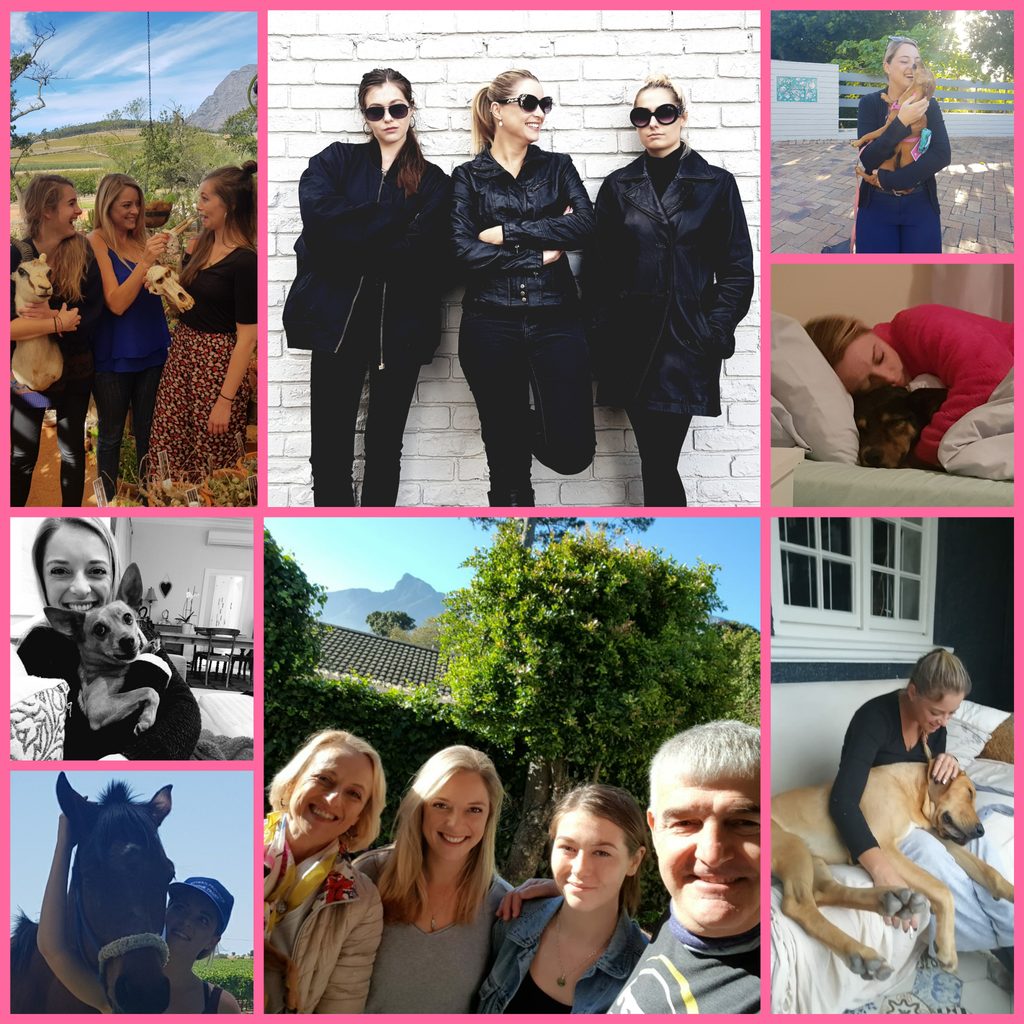
These are not evidence of a successful conclusion to my recovery. They are part of a life I once could not imagine having. I do not believe that what happened to me needed to happen so that I could find meaning in it. There are things I would change in an instant if I could, and losses that no amount of personal growth will ever make worthwhile. But a life shaped by suffering can still hold meaning, and that meaning does not depend upon the suffering having been necessary.
What I Would Tell Her: When I think about the woman who arrived at Imani, I wish I could sit beside her for a little while. Not to promise her that everything would become easy, or that she would never again feel frightened or alone.
I think I would want to tell her that her life would have meaning.
That there were people who would continue to love her, even when she could not understand why. That she would build relationships she could not yet imagine, find words for experiences that had remained unspoken, and create things that might offer somebody else a little of the understanding she had so desperately needed. And I would want her to know that she did not have to become an entirely different person to deserve any of it.
To everyone at Imani who was part of my treatment, I hope you know how profoundly grateful I am. I know I was not always the easiest or most compliant client. There were conversations I resisted, boundaries I struggled to accept, and moments when I could not recognise the seriousness of what you were trying to help me overcome. Yet you continued to see beyond my illness and my resistance, recognising a person whose life was worth protecting even when I could not recognise that myself.
Because of you, I have had nine years in which to rebuild relationships, confront painful truths, experience love, write, create, struggle, begin again, and discover that my life could hold meaning even when it remained difficult. Your determination, compassion and belief in me quite literally saved my life. I don’t think gratitude of this magnitude can ever be fully expressed through words, but I hope there is meaning in knowing what became possible because you continued to care.
Nine years ago, I arrived at Imani unable to recognise the seriousness of my illness, frightened of the people who wanted to love me, and uncertain of what I could possibly have to offer the world. I could not have known what lay ahead, or how many times I would still need to find my way through darkness.
But I am here to tell you about the life that followed. And I will never forget the part you played in making that possible.
“We are deeply grateful to Simone for sharing her story with such honesty, courage and generosity. Her words remind us why recovery matters, and how profoundly a life can change when someone is given the opportunity to heal, reconnect and discover what is possible.” Alison Bloomberg-Green, Director.
Still healing. Still becoming. Still staying.