
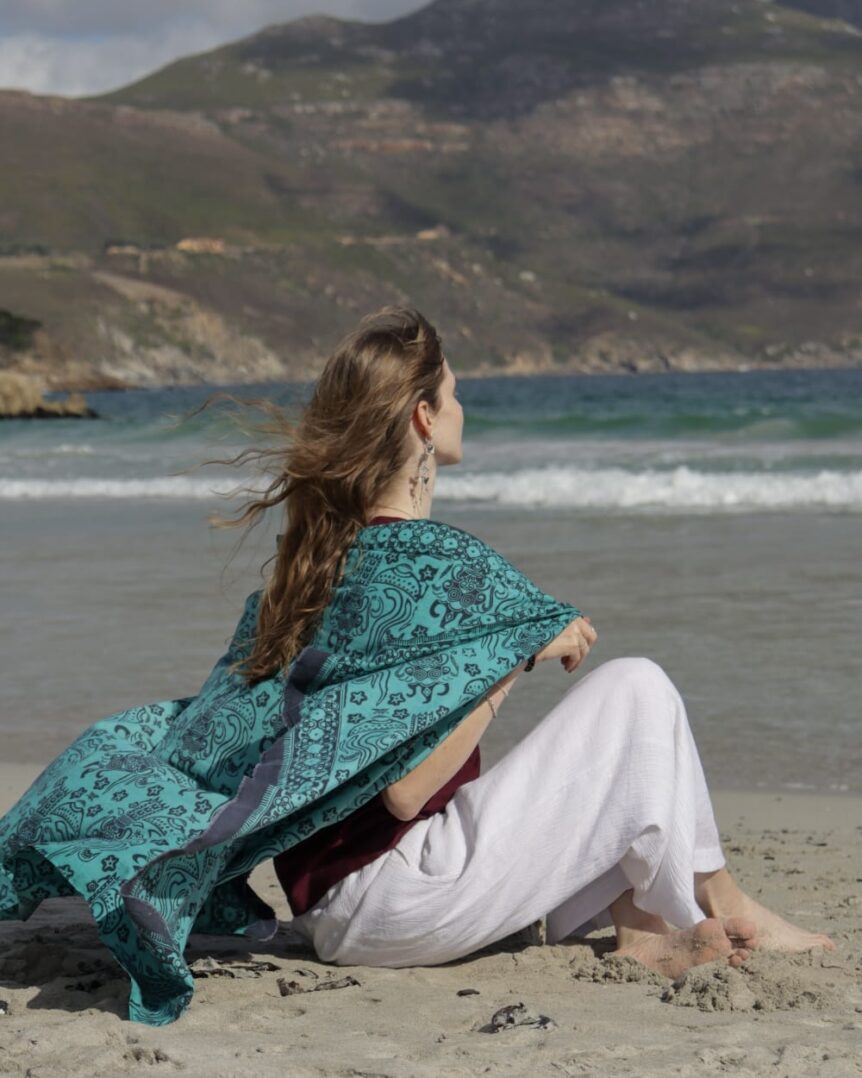
ELINE’S STORY
I Didn’t Want to Fall
Recently, one of our former clients, Eline, shared her experience of recovery with us. Having spent seven months at Imani, she has now been home for almost two months and is navigating the challenges of returning to everyday life while continuing to choose recovery.
In her own words, Eline reflects on what brought her to Imani, what she learned about herself, and what it has meant to return home with a different understanding of her eating disorder and new tools for facing life beyond treatment.
Over a year ago, I was deep in a relapse, not sure if I would make it until the next day. I had never experienced this level of powerlessness.
I had heard of people going to Imani, so I started doing some research. Something about the way they approached recovery made me feel that they could help me in a way previous treatment hadn’t. I became curious about what my life could be like without my eating disorder.
And then, finally, in December 2025, I was able to go. I packed my bags and got on the plane.
“I’m staying as long as I need to,” I said. “I want to recover for real this time.”
Imani taught me a way of recovering that I had never experienced before. The holistic approach was exactly what I needed. Not only was my eating disorder challenged, but I also learned about the underlying issues and how to deal with them.
The development of an eating disorder isn’t simply about wanting to be thin. I had to learn to look beyond the number on the scale and ask myself what I believed being thin would actually give me. That’s why Allison, the director of Imani, often asked us in groups, “What does thin feel like?” It was a way of getting us to look beneath the eating disorder and explore what we were really searching for.
I am forever grateful for the efforts the team made to give me the best possible chance at long-term recovery. They genuinely cared. Yes, they challenged me. They pushed my buttons and made me shed many, many tears. I thought I knew better and found myself arguing a lot, only to realise, more often than I liked, that they were right and that I had been blinded by the insanity of my eating disorder.
Despite wanting to get better so badly, I still found it hard to connect with recovery. My counsellor told me one day:
“Keep doing the next right thing and go against every little thing your eating disorder tells you to do. One day at a time, and the feeling will come.”
And, that’s what I did, and she was right. I gradually gained freedom and started to feel more secure in myself. I gained space for feelings and experiences. I used to struggle to understand how I had developed an eating disorder in the first place. But I learned about my disordered thought patterns and the ways I dealt with emotions. I learned how my depression and ADD affected my life, and I rediscovered my own interests, identity and values, things that I had completely lost over the previous few years.
Not only the team, but also the community played a huge role in my recovery.During my stay, I met so many special people, each with their own story. There was nobody who understood me in quite the same way as they did. I have always found it incredible that you can feel an almost immediate, unspoken connection with someone who shares the same struggles as you.
After seven months at Imani, I’ve now been home for almost two months. It felt strange to come back as a completely different person to a place where I had been so ill. The same people I had argued with. The same room where I had self-destructed. The same supermarkets filled with products whose calories I once knew by heart.
My loved ones understandably had their doubts in the beginning. I had been in treatment before and relapsed, so why would this time be any different? But this time I was coming home with a different understanding of myself and new tools for dealing with my eating disorder.
I missed the community a lot and sometimes felt lonely in the struggles that had followed me home. The disorder isn’t gone. It still tries to dictate my choices and actions. But now I am able to take a step back and ask myself what is really going on. I can reach out, use the tools I’ve learned and get myself back on track.
Being in an eating disorder world and being in recovery are two completely different things.
Recovery reminds me of what I need to look out for and why recovery was the right choice in the first place. I practise gratitude every day. That simple habit reminds me of how life used to be and helps me build the resilience to keep choosing recovery.
I genuinely never thought I would get this far. I once wrote in my journal that my anorexia felt like sitting on the edge of a cliff. I don’t have a fear of heights, and sitting there felt almost thrilling. There was a part of me that wanted to let go of the suffering and just jump.
But deep inside, I realised that I didn’t actually want to fall.
As I moved away from the edge and surrendered to the help of the people around me, I started to experience a new kind of life.
If you have doubts about going to treatment, I would encourage you to go. Your eating disorder will tell you to stay sick a little bit longer, to lose a couple more kilos first, or that now simply isn’t the right time.
But recovery has taught me that there will never be a perfect time. At some point, you have to make the decision to step away from the edge and accept help.
And I did.
One step at a time. One day at a time. One meal at a time.
I’m still learning. I’m still choosing recovery. And I know there will be difficult days ahead. But I’m no longer sitting on the edge of that cliff.
I chose to step away.
I chose to ask for help.
And that has made all the difference.
Thank you, Eline, for sharing your story with us and for allowing us to share it with others. It takes courage to speak so openly about the reality of recovery, including the difficult days and the uncertainty that can come after treatment.We are grateful to have been part of your journey and wish you continued courage, growth and freedom as you take your next steps.