“Riding the Waves”
How surfing became part of my healing journey
“Before Imani, even leaving the house felt impossible. I never imagined I’d stand on a surfboard one day — or that I’d feel peace again.”
This is the journey of one of our incredible former clients — a courageous recovery warrior who discovered surfing during their time at Imani.
What inspired you to start surfing, and how did it become part of your journey?
When I arrived at Imani, I was living with extreme anxiety. For weeks, I couldn’t leave the house and doubted if I ever could. One of my first outings was to Muizenberg Beach, where I experienced a rare moment of calm — and watched surfers glide through the waves. I’ve always loved the ocean; it’s been a happy place for me.
When I was encouraged to try activities that might help, surfing came to mind. I’d never done it before, but after getting the team’s approval, I booked a lesson. It quickly became a safe space — a reason to keep showing up. Surfing gave me something meaningful to focus on and helped settle my mind with kindness rather than criticism.
How does being in the ocean and riding the waves make you feel — physically and emotionally?
Before Imani, my eating disorder stripped away almost all my interests. Through recovery, I’ve reconnected with my love for the sea — whether it’s breakfast on the beach, a dip in the tidal pool, listening to waves, or riding them. Being on the water brings peace I hadn’t felt in years.
I have sensory sensitivities, but the textures and sensations — the sand, salt, crashing waves, cold water — became grounding rather than overwhelming. Surfing helped me stay present. Many of the recovery tools I’d learned translated directly onto the board: trust, belief, surrender, and persistence. You fall a lot, but you keep going — and eventually, you stand.
Standing on the board felt impossible — until I did it. It was the first time something felt rewarding that didn’t involve restriction or self-harm. Physically, I became more grounded and stronger. Wearing a wetsuit used to be confronting, but surfing shifted my perspective. If I get to live in this body and surf — that’s enough. I began to value strength over appearance.
The surf community felt welcoming. No one cared what I looked like — they were just happy to be out there. I expected weight gain to equal rejection. Instead, I felt accepted.
Have you noticed any changes in your mindset or self-perception since you started surfing?
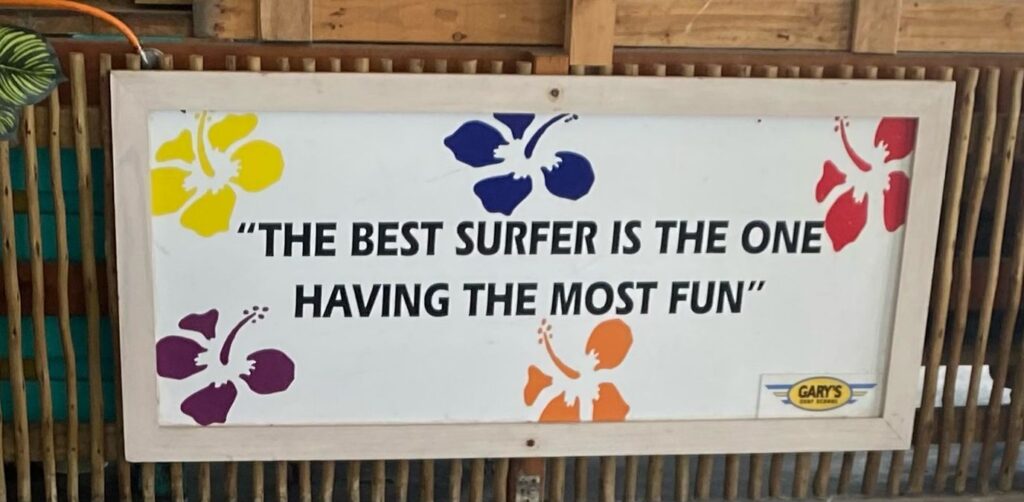
I’ve always felt like I didn’t belong anywhere. But the surf community made space for everyone. At the surf school, a quote on the wall reads, “The best surfer is the one having the most fun.” That stuck with me. It wasn’t about being perfect — it was about enjoying the moment.
The more I went, the more I saw possibilities: maybe I can talk to people. Maybe I can spend money. Maybe my body does let me do things. I began to imagine a life beyond my eating disorder.
As someone who is Autistic, I’ve always struggled to see myself in a 9–5 job. My energy levels and social anxiety made me feel incapable. But volunteering at the surf school showed me that there are occupations that could suit me — and that I can give back. Recovery has helped me move beyond the self-centeredness of my illness.
Surfing helped me see my body with gratitude. It does so much more than just take up space. Before, my eating disorder gave me structure — it kept me occupied and gave me a (false) sense of purpose. But surfing offered something better. Something I didn’t want to lose.
It became more important to me than being the thinnest. More important than the ever-moving goalposts of my eating disorder. I finally had something to fight for.
What challenges did you face at the beginning — and how did you overcome them?
My anxiety affected everything: social situations, money, leaving the house. It was one of the biggest reasons I came to Imani. I often needed support from an RA just to get out the door. Even thinking about going into the surf school, speaking to people, or paying for a lesson felt overwhelming.
I started small: beach walks, sitting near the water, then practicing spending money. I worked up to surfing, step by step. CBT tools helped — reframing thoughts like “spending money is part of recovery,” or “these people won’t judge me.” Avoidance only made things harder.
I used grounding tools: fidgets, breath work. The Imani community played a huge role — they encouraged me even when I doubted myself. Surfing with other residents helped, too. Laughing with someone in the water felt like a miracle.
I used to get so frustrated. My perfectionism told me not to try unless I’d be instantly good — but that’s not how surfing works. It takes perseverance, courage, and trust.
When I’d fall off the board or struggle, I had to change my thoughts:
“I can do it.”
“I’m doing it.”
“That’s what matters.”
I learned to focus less on being perfect and more on being grateful: grateful that the water held me, that I got to try, that I was showing up. That mindset shift helped me through surfing — and continues to help in recovery.
Everyone starts somewhere. Like recovery, it takes time, practice, and patience.
Now that I’m home, I’m looking for surf spots— not calorie counts.
This feels like freedom to me!
“Thank you for sharing your journey with such honesty and heart. Your courage, persistence, and newfound sense of freedom remind us all that healing is possible — and that the waves, like recovery, are always worth riding.”